2048 Puzzle Fun
- 4.5
- Rating
- 1.00M
- Installs
- Free
- Price
 Analysis by App-foxy
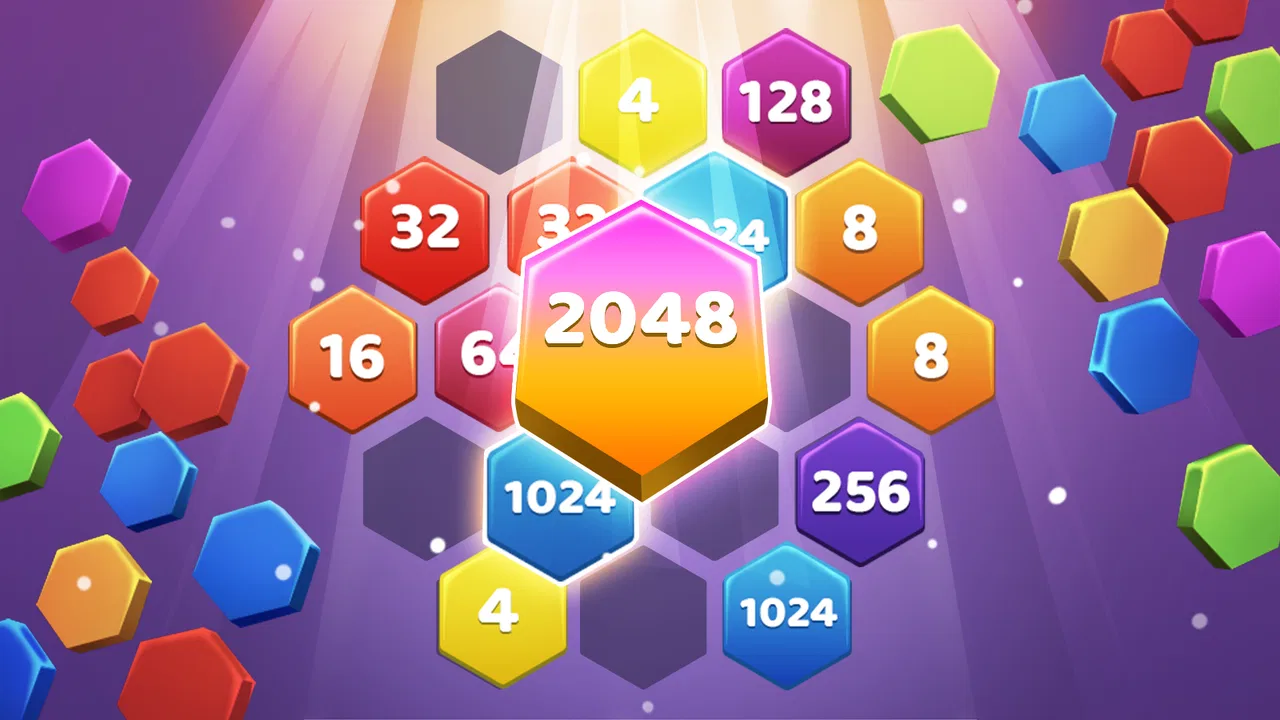
I found 2048 Puzzle Fun easy to understand within a few seconds, which is exactly what I want from a casual puzzle game. The basic idea is familiar: combine matching numbered tiles, keep the board under control, and work toward larger values without filling every space. Its small twist gives the experience a slightly different feel from the most stripped-down versions of 2048, but the appeal still comes from the same simple loop: one move takes a moment, yet a careless decision can affect the entire board.
That makes it a useful game for short breaks rather than something I would open when I want a long, story-driven session. I can play while waiting for an appointment, during a quiet commute, or at home when I want something mentally active without a large commitment. The game is free, rated for Everyone, and developed by Gimica GmbH. It has reached over 500 thousand installs, with an average score of 4.1 from around 1.1 thousand ratings, so it has already found a modest audience among people who enjoy this familiar puzzle format.
How the board feels to read and navigate
The strongest part of this type of game is its visual simplicity. A 2048 board presents the important information directly: the position of each tile, the number printed on it, and the empty spaces that give me room to plan. I do not have to learn a complicated menu system or remember a set of controls. That low learning curve is especially helpful for anyone who wants a casual game that can be understood without a tutorial-heavy introduction.
You May Also Like

 Blood Strike: 2.5 Anniversary
Blood Strike’s Loadouts Turn Every Drop Into a Tactical Gamble
A close look at Blood Strike’s custom loadouts: how fast access to signature weapons reshapes its battle royale rhythm, rewards preparation, and narrows the gap between fights.

 Pandora - Music & Podcasts
Pandora’s Music Is Easy to Start, but Harder to Recover
Pandora’s strength is its low-effort path from a seed to a station. Its weak spot is how much confidence it asks you to place in connection, setup, and quiet recovery.

 8 Ball Pool
 Is Built on Rivalries, Rematches, and Routine
A close look at the rivalries, rematches, shared routines, and unanswered safety questions that turn a quick pool match into a persistent mobile community.

 Samsung Music
’s Quiet Strength Is Playing What You Already Own
Its reach comes less from spectacle than from dependable access to a personal library. That simplicity is both the app’s strongest retention engine and its ceiling.

 AccuWeather: Weather Radar
AccuWeather Review: A Quick, Clear Forecast for Everyday Decisions
For everyday plans, the best forecast is the one you can understand quickly. AccuWeather makes rain timing, radar, and local conditions easy to act on, with a few trade-offs.

 Hill Climb Racing
Why Hill Climb Racing Still Turns Crashes Into One More Run
A tiny car, a bumpy hill and one more upgrade: Hill Climb Racing keeps resurfacing because its simple chaos makes every near-miss feel personal.
More From Our News Desk
View All News


In my experience, the main challenge is not finding the controls but reading the board quickly enough to make a good decision. A move can look harmless when I focus on one pair of tiles, while the resulting arrangement creates a problem somewhere else. I get better results when I pause before every swipe and scan all four edges of the board. This is a small habit, but it makes the game feel more deliberate and reduces the frustration caused by impulsive moves.
The numbered tiles also create a natural visual hierarchy. Larger values attract attention, while empty spaces show where future combinations might happen. I find it useful to keep one side of the board as an informal anchor instead of moving tiles randomly in every direction. That approach is not a special feature of this particular title, but it suits the compact presentation and makes the board easier to follow, especially when several values are visible at once.
Navigation outside the board matters too. A casual puzzle should let me get into a round without fighting through layers of options. This game works best when treated as a quick, focused activity, and its familiar format supports that. Someone who dislikes complex interfaces will probably appreciate the directness. Someone expecting a large collection of modes, extensive customization, or a guided progression system may find the experience comparatively plain.
One practical tip is to avoid judging a move only by the number it creates. A tempting merge can remove an important empty space and leave the next turn awkward. I usually look first at whether the move keeps the board readable and flexible, then at whether it produces a larger tile. That change in priority makes the game more approachable for new players and also gives experienced 2048 fans a more controlled way to play.
Clear enough for different reading needs
The game’s central concept is communicated through numbers and tile positions rather than long text. That is a genuine advantage for people who prefer visual, language-light interaction. I can understand the goal without reading a large amount of instruction, and the short sessions make it easier to stop and resume without losing the basic context of what I am doing.
At the same time, number tiles are not automatically easy for everyone to read. Players with reduced vision may find small digits, close tile colors, or a crowded late-game board tiring. I would not assume that the simple layout solves every readability issue. Before settling in, I would check whether the numbers remain comfortable to distinguish on the device being used, particularly if the screen is small or the display is viewed from a distance.
Color can also influence how quickly I understand the board. In a puzzle built around tiles, visual separation helps me identify groups and empty positions. Players who have difficulty distinguishing certain colors may need to rely more heavily on the printed numbers and the location of each tile. That is workable when the digits remain clear, but it can become more demanding once the board is crowded.
For an older family member who wants to try it, I would recommend starting with the phone held steadily and the display set to a comfortable brightness. I would also explain the goal in one sentence rather than handing over the device without context. The controls are simple, but a brief explanation removes the only real barrier for someone unfamiliar with the 2048 format.
Touch control, movement, and sensory comfort
The game’s interaction is built around directional movement, so the physical action is straightforward. I do not need precise tapping on tiny buttons to make a move; the important gesture is the direction of the swipe. That can be more comfortable than a puzzle that demands repeated rapid taps or accurate selection of small interface elements.
However, a swipe still requires a degree of controlled movement. Players with limited hand mobility, tremors, joint pain, or difficulty performing directional gestures may find the board less comfortable than someone using ordinary touch control. The game is simple to operate, but simple does not mean universally effortless. I would be cautious about recommending it as an accessible option without first testing the gesture on the intended device.
There is also a mental-motor trade-off. A move may be physically easy, yet the player has to decide quickly whether it will damage the board. That is not a reflex challenge in the same way as an action game, but it can create pressure for people who prefer slower, fully predictable interactions. The good news is that the puzzle naturally allows me to pause between moves. I can take my time, examine the board, and swipe only when I am ready.
For sensory-sensitive players, the quiet, abstract nature of numbered tiles may be preferable to a game filled with characters, flashing effects, or constant visual motion. Still, the overall comfort depends on how the particular device displays the board and responds to touch. I would play with a stable grip and avoid using it in a moving vehicle if motion makes screen reading uncomfortable. The game is better suited to a calm pause than to a visually busy environment.
A useful strategy for reducing strain is to use shorter sessions and stop before the board becomes mentally exhausting. Because the game is built around small decisions, it is easy to keep playing after concentration has started to fade. That is when I make careless swipes. Treating each round as a brief focus exercise rather than an endless challenge improves both comfort and results.
Where it fits into everyday situations
I think the best everyday use case is a waiting period with no reliable timetable. If I am sitting in a reception area or waiting for food, I can play one move at a time and put the phone down immediately when my name is called. It does not require me to remember a story, coordinate with other players, or reach a checkpoint before stopping. That flexibility is more valuable than it sounds.
It also works well as a low-pressure alternative to scrolling. When I want a short activity that asks me to think but does not demand full attention for half an hour, the board gives me a clear focus. I can play cautiously, take a break, and return later with the same general objective in mind. For people who find fast games overwhelming, this slower puzzle structure may be a better fit.
There are limits to that convenience. A crowded public place, a shaky commute, or poor lighting can make the board harder to read and the gesture less reliable. I would not choose it while walking, cycling, or doing anything that requires attention elsewhere. Even though the game is casual, it still rewards concentration, and a distracted player can ruin a carefully arranged board with one accidental movement.
Its Everyone rating makes it suitable for a broad audience in terms of age, but age suitability is not the same as equal ease of use. A child may understand the merging idea quickly, while an adult who is not accustomed to swipe controls may need a demonstration. Conversely, a younger player looking for constant rewards, characters, or fast visual action may lose interest because the satisfaction here comes from planning rather than spectacle.
I also see value in using it as a small mental warm-up. Before a study session or a task that requires organization, a few careful moves can encourage attention to patterns and consequences. I would not treat that as a proven training benefit, but as a personal routine it can be pleasant. The important distinction is that the game offers a focused puzzle, not a substitute for formal cognitive or accessibility support.
What separates it from other 2048 choices
The familiar 2048 format is available in many forms, from extremely minimal versions to games that add themes, challenges, leaderboards, or elaborate progression. This title sits closer to the straightforward casual end of that range. Its advantage is that I can understand the central activity without committing to a larger game system. If I want a recognizable number puzzle with a small variation, it is a comfortable choice.
Compared with a bare-bones 2048 clone, the twist may make the experience feel less routine, although it does not transform the game into a completely different genre. Players who enjoy the original formula mainly for its purity may prefer the most basic alternative. I would choose this version when I want the familiar rules with a little extra character, not when I am searching for a deep campaign or a large set of puzzle types.
Compared with more feature-heavy casual puzzle games, it is less demanding in terms of learning and ongoing attention. There is no need to manage a collection, follow a story, or coordinate a daily routine in order to understand the board. That can be a strength for people who want a self-contained pastime. The trade-off is that the experience may feel repetitive sooner for players who need frequent novelty.
The game’s free price also lowers the barrier to trying it. I can test whether the style suits me without making a purchase decision first. Still, free access alone does not guarantee that it will be the right option. Someone who wants advanced accessibility controls, highly adjustable presentation, or a broad range of alternative input methods should compare it with other puzzle apps before settling on this one.
My most useful comparison point is control over pace. Many casual games create urgency through timers or limited turns. This 2048-style board is more forgiving because I can think before moving. That makes it a better match for reflective players, people who dislike time pressure, and anyone who wants to play in short fragments. It is a weaker match for those who need social competition or constant external goals to stay engaged.
Practical barriers I would consider first
The main barrier is the possibility of visual fatigue once the board fills with tiles. Early moves are easy to scan, but later positions require more concentration because several numbers compete for attention. If I am already tired, I am more likely to overlook a useful empty space or confuse the order of a planned sequence. Taking a pause is often more effective than trying to force a better move.
Another barrier is accidental input. A swipe in the wrong direction can change the board immediately, and the consequences may not be reversible. This matters for players whose touch gestures are inconsistent or for anyone using the game while holding the phone awkwardly. I prefer to keep one hand stable and make a deliberate, moderate swipe rather than dragging quickly across the screen.
The game can also be frustrating for players who interpret every failed board as a personal mistake. The puzzle rewards planning, but randomness and limited space still influence how a round develops. I find it healthier to treat each board as a sequence of decisions rather than a test that must always end successfully. That mindset is particularly important when introducing it to children or to someone who is easily discouraged by losing progress.
Because the experience is intentionally focused, it may not satisfy people who need spoken guidance, extensive text alternatives, or a highly configurable interface. I would not promise those accommodations based only on the game’s clean appearance. If a player depends on a specific accessibility setting, the sensible approach is to test the app directly on the device and operating system they use before relying on it regularly.
The technical entry point is fairly broad: the listed minimum operating system is Android 7.0, and the current version is 1.4.0. That makes it relevant to people who are not using the newest phone, although the actual comfort of play will still depend on screen size, touch response, and display quality. In practical terms, an older compatible device may run the game while still making the numbers or gestures less comfortable than on a newer screen.
Who I would recommend it to
I would recommend it to someone who likes number puzzles, wants a free casual game, and prefers a quiet activity that can be paused at any moment. It is especially suitable for players who enjoy planning several moves ahead without timers, stories, or complicated controls. The Everyone rating also makes it a reasonable family-friendly option, provided each player can comfortably read the board and use the swipe interaction.
I would be more cautious with anyone who needs strong customization for vision, touch, or sensory access. The simple board is helpful, but it should not be confused with a guarantee that every player will find the presentation comfortable. I would also point frequent puzzle players toward alternatives if they want daily missions, competitive rankings, richer progression, or a large variety of mechanics.
For my own use, the best routine is to play in short sessions, keep the board anchored around one side, and scan the empty spaces before committing to a swipe. I avoid making moves simply because a merge is available. That small discipline reveals more of the game’s strategy and reduces the sense that the round is controlled by luck alone.
My inclusive verdict
2048 Puzzle Fun succeeds because it keeps the central puzzle approachable while adding enough variation to avoid feeling completely bare. Gimica GmbH has positioned it as a casual game rather than an elaborate platform, and that focus is its clearest strength. I can open it for a few minutes, understand what needs to happen, and stop without losing the thread.
Its accessibility is strongest in its low language demand, simple objective, flexible pace, and limited need for precise button tapping. Its weaker points are equally important: reading crowded numbered tiles may be tiring, directional swipes may not suit every player, and the focused presentation may offer too little support for people who need extensive customization. Those are not reasons to dismiss it, but they are reasons to test it in the real context where it will be used.
With an average rating of 4.1 and around 139 written reviews, the response is positive without suggesting that the game will satisfy everyone. I read that as a fair reflection of its role: a pleasant, accessible-to-many number puzzle rather than a universal solution for casual gaming. If you want a free, familiar board with a little extra flavor and room to think, I believe it is worth trying. If you need advanced access options or constant variety, another puzzle game may be a better choice.
Overall, I would keep it installed for waiting rooms, quiet evenings, and those moments when I want something more engaging than passive scrolling. The best way to approach it is patiently: check the whole board, protect open space, and let the game remain a small mental break instead of turning every round into a high-pressure contest.
FAQs for 2048 Puzzle Fun
01What is the main objective of 2048 Puzzle Fun?
The main objective of 2048 Puzzle Fun is to combine numbered tiles on a grid to create the tile with the number 2048. Players slide tiles in one of four directions, merging similar numbers to add up to higher numbers. The game continues until the 2048 tile is formed or no more moves are possible.
02Is 2048 Puzzle Fun free to download and play?
Yes, 2048 Puzzle Fun is free to download and play on both Android and iOS devices. However, it may contain in-app purchases and ads that can enhance the gaming experience or provide additional features. It's important to check the app's details on the store for specific pricing information.
03What are some unique features of 2048 Puzzle Fun?
2048 Puzzle Fun offers several unique features, such as different game modes, customizable themes, and a user-friendly interface. Some versions may include a leaderboard to compete with friends or global players, along with various difficulty levels to challenge both beginners and veterans.
04Does 2048 Puzzle Fun require an internet connection to play?
No, 2048 Puzzle Fun does not require an internet connection to play. It is an offline game, making it perfect for playing during travel or in areas with limited internet access. However, certain features like leaderboards or ads may need connectivity.
05How can I improve my skills in 2048 Puzzle Fun?
Improving skills in 2048 Puzzle Fun involves strategic thinking and practice. Focus on building higher numbers in one corner and avoid unnecessary tile movement. Planning moves ahead and understanding tile combinations can significantly enhance gameplay. Many online guides and tutorials offer tips for mastering the game.
Pros
- Simple
- intuitive controls for easy gameplay.
- Satisfying sound effects enhance the experience.
- No internet connection required to play.
- Lightweight app with minimal storage usage.
- Challenging levels improve strategic thinking.
Cons
- Ads can be intrusive during gameplay.
- Limited visual themes available.
- No multiplayer or social sharing features.
- Difficulty curve may frustrate some players.
- Lacks a comprehensive tutorial for beginners.

2048 Puzzle Fun
Gallery